Showing posts with label breastfeeding. Show all posts
Thursday, August 8, 2013
Breastfeeding According to the Facebook
I'm frequently on my smart phone while nursing, so I get a lot of time to browse Pinterest and Facebook. I often save pictures and sayings that I find amusing, most of which center around motherhood. In honor of World Breastfeeding week, I thought I'd share some of the hilarious breastfeeding memes I've collected over the past few months. Enjoy!
Saturday, July 6, 2013
Pinterest Project: Homemade Nursing Tank Top
When I was pregnant with Jadon, I thought that I would return to my "normal" wardrobe when I left maternity clothes behind. However, after he was born, I realized how cumbersome normal clothes can be for breastfeeding.
I'm pretty modest when it comes to feeding Jadon. I have no problem nursing in public, but I always use a cover. I prefer shirts that have a "criss-cross" bodice that can be moved to the side for feeding. I hate lifting up my shirt if I'm not wearing a nursing tank top underneath because I don't want to expose my middle.
Not surprisingly, nursing tank tops cost more than regular tank tops. The few nursing tank tops I own started showing signs of wear after only a few months since I wore them all the time. I found myself looking longingly at the unused ordinary tank tops in my drawer when I put my laundry away.
Then, one fateful day, I absentmindedly typed "diy nursing tank top" into the Pinterest search engine. I was thrilled to see that other nursing women had gone before me in making the nursing wardrobe easier for everyday life. The solution was so simple I was surprised I hadn't thought of it myself.
I tried the technique on one of my ordinary tank tops right away. I simply cut the straps so that there was about an inch left, and curled it around to create a loop. This loop could easily be attached to the front panel of any nursing bra.
However, after I glanced at the available tutorials, I noticed that everyone had a solution for the front of the tank top, but said nothing about the straps on the back! If there was no way to attach the back of the tank top to the nursing bra, wouldn't the back of the tank top eventually fall down your back?
I found that the back was only a problem if the tank top was especially loose. Tighter-fitting tank tops stayed up on their own, for the most part. As one of my loose-fitting tank tops was falling a lot, I set out to fix the problem.
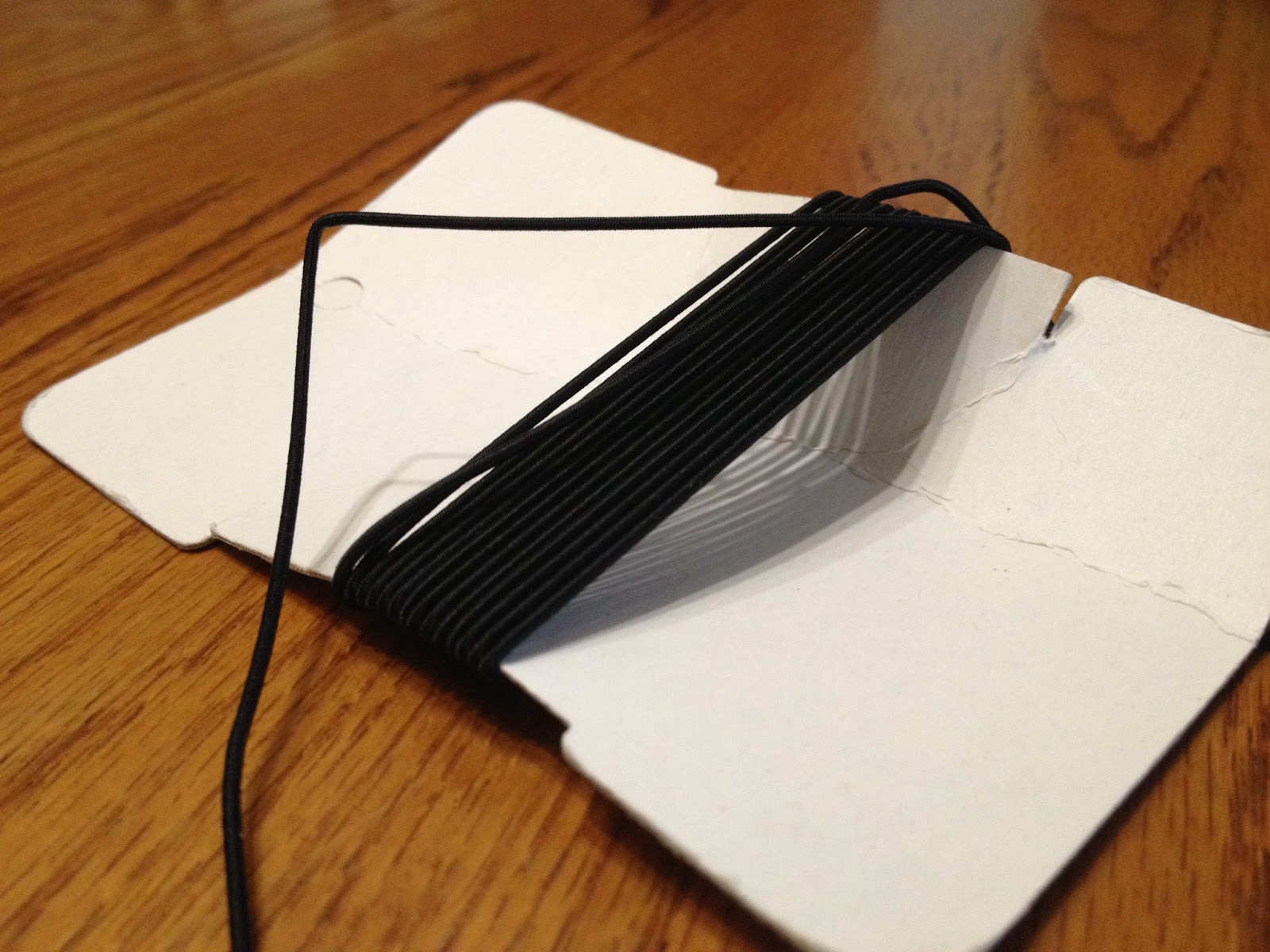
My solution involves a pair of buttons and some thin elastic.
Most adjustable tank tops have a little plastic circle for the strap to feed through on the back. Save this little circle to anchor the elastic.
If you don't have thin elastic lying around, you can also use a small hair tie. Whichever you use, loop it to the plastic circle, as pictured above.
Finally, on either side of the original back straps, hand-sew the plastic loop and a button to the tank top. The elastic piece can now be pulled around the back of the bra strap, keeping the tank top from sliding down your back.
My back solution can probably be improved upon. For example, it's a little difficult to loop the elastic around the bra strap by yourself (that is, if you're already wearing the bra). Maybe I don't really need the little plastic circle (the thrifter in me wants to find a purpose for everything!). Depending upon the fabric, and the size of your button, you might get an annoying "button bump" sticking out of your back.
I'll update this post if I think of something else for the back of the tank top. In the meantime, I'm definitely open to ideas.
I'm pretty modest when it comes to feeding Jadon. I have no problem nursing in public, but I always use a cover. I prefer shirts that have a "criss-cross" bodice that can be moved to the side for feeding. I hate lifting up my shirt if I'm not wearing a nursing tank top underneath because I don't want to expose my middle.
Not surprisingly, nursing tank tops cost more than regular tank tops. The few nursing tank tops I own started showing signs of wear after only a few months since I wore them all the time. I found myself looking longingly at the unused ordinary tank tops in my drawer when I put my laundry away.
Then, one fateful day, I absentmindedly typed "diy nursing tank top" into the Pinterest search engine. I was thrilled to see that other nursing women had gone before me in making the nursing wardrobe easier for everyday life. The solution was so simple I was surprised I hadn't thought of it myself.
However, after I glanced at the available tutorials, I noticed that everyone had a solution for the front of the tank top, but said nothing about the straps on the back! If there was no way to attach the back of the tank top to the nursing bra, wouldn't the back of the tank top eventually fall down your back?
I found that the back was only a problem if the tank top was especially loose. Tighter-fitting tank tops stayed up on their own, for the most part. As one of my loose-fitting tank tops was falling a lot, I set out to fix the problem.
My solution involves a pair of buttons and some thin elastic.
Most adjustable tank tops have a little plastic circle for the strap to feed through on the back. Save this little circle to anchor the elastic.
If you don't have thin elastic lying around, you can also use a small hair tie. Whichever you use, loop it to the plastic circle, as pictured above.
My back solution can probably be improved upon. For example, it's a little difficult to loop the elastic around the bra strap by yourself (that is, if you're already wearing the bra). Maybe I don't really need the little plastic circle (the thrifter in me wants to find a purpose for everything!). Depending upon the fabric, and the size of your button, you might get an annoying "button bump" sticking out of your back.
I'll update this post if I think of something else for the back of the tank top. In the meantime, I'm definitely open to ideas.
Monday, April 1, 2013
Breastfeeding Essential: Breast Pad Tutorial
When I found out I was pregnant with Jadon, a good friend let me borrow her maternity clothes and several baby items that her daughter outgrew. As we went through her large bin together, I came across ten flat, cotton circles and asked my friend what they were. "Breast pads," she replied, assuring me that I would definitely need them at some point. Boy, was she right.
In case you didn't know this, when a baby breast feeds, they actually can "suck" for a few seconds before they actually get any milk. The feeding action prompts a woman's body to "let down" the milk in response to the demand. Depending on the woman and the length of the feeding, there may be several letdowns within one feeding, and in varying amounts. The annoying part of this reflex is that the milk can let down from both breasts, even though the baby is feeding from one. In addition, sometimes other stimuli (baby crying, hours since last feeding, even thinking about baby) can result in a let down. In order to avoid embarrassing wet spots, most nursing mothers wear breast pads. I hardly leave the house without them.
Now that my friend is expecting again (due in June!), I'm slowly returning her clothes and baby stuff for her to use again. Before I could return her breast pads, I knew I had to make some of my own to replace hers. Now that I know my own body's tendencies, I tried to "upgrade" my breast pads a bit with some features that better suit my needs.
![]() |
| One of the borrowed breast pads...with Jadon buzzing his lips in the background. |
Even though my friend's breast pads had several layers of cotton, I still occasionally leaked through them. I compensated by always packing a spare shirt to wear in the diaper bag (and if I changed, I always said that Jadon had spit up on me...sorry, buddy!). Once they got wet, the cotton fabric would not dry while I was still wearing them. I would still feel wet until I could swap them for new ones. My friend's pads were a little wide for my taste (about four inches in diameter). I didn't like how the extra fabric rippled and bunched up on the sides. I also found that five pairs of pads didn't always last to my next laundry load.
![]() |
| Sewing the three layers together. |
I made my breast pads from three layers of fabric. First, I chose microfleece (the light green fabric) to sit against my skin because it has wicking properties. When moisture comes in contact with microfleece, it does not absorb into the fabric, but easily passes through it. I chose a new super-shammy (the orange fabric) as my second fabric because it can absorb a lot of moisture. Cotton, hemp, or other absorbent fabrics could be used in place of the super-shammy. Finally, I chose leftover scrap PUL (polyurethane laminated) fabric as my third fabric because it's waterproof. PUL fabric is often used in making cloth diapers for the same reason.
I started my cutting out all my circles with a 3.5 inch diameter, and stacked the layers appropriately. I sewed a single seam around the perimeter of my layers to hold everything in place.
![]() |
| My new breast pad stash! |
Then I used my serger to simultaneously trim and finish the breast pad edge. In the end, the pads measure about three inches in diameter. I made eight pairs of pads in all. I'm very happy with the results. So far, I haven't had any problems with bunching, leaking, or running out of clean pads.
Before you make your pads, you may need to get to know your own body a bit. I feel compelled to say that pads made with PUL fabric are not as breathable as all-cotton pads. Some women are prone to plugged milk ducts, thrush, and tender skin. Since I've never had these problems, and I have a strong letdown, PUL fabric is a good match for me. Women who need a more breathable breast pad can use lanolized wool as a waterproof outer layer.
Happy sewing (and nursing)!
Tuesday, October 2, 2012
Did you know THIS about Breastfeeding?
My little family just got back from our first real weekend road trip. We spent five days in Pella, Iowa at our denomination's regional presbytery meeting. Jon got to listen in on the official business with the pastors while I enjoyed a day out and about with the ladies. Of course, Jadon had to tag along, too. I couldn't believe how good he was! He still had his normal fussy baby moments, but he managed to be asleep at all the right times. It's such a treat now to eat an entire meal without a baby on my lap!
On the ride home, I finally finished the book Real Food for Mother and Baby: The Fertility Diet, Eating for Two, and Baby's First Foods. I started it when I was past my due date and haven't had time to return to it since Jadon's birth. Picking it up again, I was particularly interested in the breastfeeding chapter since I have recently entered breastfeeding mommahood. The benefits of breastfeeding are widely known, and I'm convinced that it's just about the best investment I can make in my son's current and future health.
This book exposed me to loads of interesting breastfeeding facts, some I already knew, and many I didn't. I decided to share a few of my favorites.
First, my body actually changes the composition of my milk as Jadon eats. As a baby starts eating, the milk is more watery. It can quench thirst if the baby feeds for only a few minutes. However, if the baby is really hungry, the longer he or she feeds, the more fatty the milk becomes. This will fill the baby up with a more satisfying meal.
Second, my body protects Jadon's from infection and sickness through breast milk, and through a process I never knew before:
Third, the flavor of my breast milk is affected by what I eat. If I am adventurous with food while breastfeeding, Jadon's palate will be more broad. Babies who are exposed to more flavors may be less picky about food as they transition to solid foods. Nina Planck, the author, encourages mothers not to worry about their milk tasting "funny." In fact, she states that "advice to avoid strong or spicy foods is nonsense" (page 146).
Fourth, and last for now, 50 percent of the calories in breast milk come from fat. These fats are extremely important for the baby's brain development. Breastfed babies tend to have better intellectual, visual, and motor skills than their formula-fed peers. Furthermore, most of the fat in breast milk (60-80 percent!) comes from the woman's fat stores in her body, not from her most recent meal. This is one of the reasons that woman pack extra fat stores in their hips and thighs during pregnancy; they need the extra fat for feeding their baby. It's also the reason why breastfeeding mothers tend to return to their prepregnancy weight faster than women who do not breastfeed. Score!
On the ride home, I finally finished the book Real Food for Mother and Baby: The Fertility Diet, Eating for Two, and Baby's First Foods. I started it when I was past my due date and haven't had time to return to it since Jadon's birth. Picking it up again, I was particularly interested in the breastfeeding chapter since I have recently entered breastfeeding mommahood. The benefits of breastfeeding are widely known, and I'm convinced that it's just about the best investment I can make in my son's current and future health.
This book exposed me to loads of interesting breastfeeding facts, some I already knew, and many I didn't. I decided to share a few of my favorites.
First, my body actually changes the composition of my milk as Jadon eats. As a baby starts eating, the milk is more watery. It can quench thirst if the baby feeds for only a few minutes. However, if the baby is really hungry, the longer he or she feeds, the more fatty the milk becomes. This will fill the baby up with a more satisfying meal.
Second, my body protects Jadon's from infection and sickness through breast milk, and through a process I never knew before:
The immunity breast milk provides is tailored, reflecting the unique ecology you and your baby share. Within hours of encountering a pathogen, you produce antibodies which pass to your baby through your milk. That's why it's natural for mothers to nuzzle, rub, kiss, and even lick their babies. You gather her germs with your mouth and skin, so that your breasts can make antibodies she needs (page 143).While I can't say I've ever had the urge to lick Jadon, I do find myself rubbing my nose on his adorable face many times throughout the day. To think this natural, loving gesture actually lends itself to protecting Jadon's body from getting sick! Amazing.
Third, the flavor of my breast milk is affected by what I eat. If I am adventurous with food while breastfeeding, Jadon's palate will be more broad. Babies who are exposed to more flavors may be less picky about food as they transition to solid foods. Nina Planck, the author, encourages mothers not to worry about their milk tasting "funny." In fact, she states that "advice to avoid strong or spicy foods is nonsense" (page 146).
Fourth, and last for now, 50 percent of the calories in breast milk come from fat. These fats are extremely important for the baby's brain development. Breastfed babies tend to have better intellectual, visual, and motor skills than their formula-fed peers. Furthermore, most of the fat in breast milk (60-80 percent!) comes from the woman's fat stores in her body, not from her most recent meal. This is one of the reasons that woman pack extra fat stores in their hips and thighs during pregnancy; they need the extra fat for feeding their baby. It's also the reason why breastfeeding mothers tend to return to their prepregnancy weight faster than women who do not breastfeed. Score!
Subscribe to:
Posts (Atom)


.jpg)